
Permits and approvals
In short: In Victoria, your building permit states whether the work needs an occupancy permit or a certificate of final inspection. A new home needs an occupancy permit before anyone moves in. Extensions and alterations to an existing house, and Class 10 work such as garages, pools and retaining walls, get a certificate of final inspection instead. The relevant building surveyor issues either one after the final mandatory inspection.
Key takeaways
- Section 21 of the Building Act 1993 requires the building permit to state whether an occupancy permit is required.
- Alterations to a house and Class 10 buildings, such as garages, sheds and pools, don't need an occupancy permit under regulation 185.
- An occupancy permit application must include the plumbing compliance certificates and electrical certificates of compliance for the work.
- Neither document is evidence that the building complies with the Building Act 1993 or the Building Regulations 2018.
- Occupying a building before its required occupancy permit is issued is an offence under section 39 of the Act.
Building or extending in Geelong? Our structural inspections team inspects footings, slabs and framing at key construction stages. Get a quote or call 03 4250 8105.
Which do you need: an occupancy permit or a certificate of final inspection?
Your building permit says which: a new home needs an occupancy permit, while an extension or alteration to an existing house, or a Class 10 building such as a garage, gets a certificate of final inspection. Section 21 of the Building Act 1993 requires the relevant building surveyor to state on the permit whether an occupancy permit is required.
It is required for all building work except work the surveyor considers minor or not to compromise the building's suitability for occupation, and work prescribed in regulation 185 of the Building Regulations 2018. When no occupancy permit is required, section 38 of the Act requires a certificate of final inspection instead.
| Project | Document | Rule or guidance |
|---|---|---|
| New home | Occupancy permit | Section 21; Consumer Affairs Victoria: an occupancy permit for new homes |
| Extension or alteration to a house (Class 1a) | Certificate of final inspection | BPC guidance; regulation 185(1)(a)(ii) |
| Garage, carport or shed (Class 10a) | Certificate of final inspection | Regulation 185(1)(a)(i) |
| Swimming pool, retaining wall or fence (Class 10b) | Certificate of final inspection | Regulation 185(1)(a)(i) |
The Building and Plumbing Commission (BPC), the trading name of the Victorian Building Authority, says extensions and alterations to existing homes don't need an occupancy permit, because the existing building should already have one. Its building classifications page defines Class 1a as a detached house or an attached dwelling such as a townhouse, and Class 10 as non-habitable buildings and structures. Our garage extension and under-house alterations in St Leonards is an example of an extension and alterations to an existing house.
How do an occupancy permit and a certificate of final inspection differ?
An occupancy permit is evidence that a building is suitable for occupation; a certificate of final inspection is issued when no occupancy permit is required and the final inspection is complete. Neither is evidence that the work complies with the Act or the Regulations.
| Occupancy permit | Certificate of final inspection | |
|---|---|---|
| How it starts | An application in Form 15, made by or for the owner, or in some cases the purchaser (section 41, regulation 186) | The inspection following the final mandatory notification stage (section 38) |
| Conditions for issue | The building is suitable for occupation and the surveyor has seen the required plumbing and electrical certificates (section 44) | No occupancy permit is required and all directions to fix have been complied with (section 38) |
| Prescribed form | Form 16 (regulation 192) | Form 17 (regulation 200) |
| Legal effect | Evidence the building is suitable for occupation, not of compliance (section 46) | Not evidence of compliance (section 38(2)) |
Who issues an occupancy permit in Victoria?
The relevant building surveyor issues it. Section 3 of the Act defines that surveyor as the municipal (council) or private building surveyor, or in some cases the BPC or another authorised building surveyor.
The BPC says the owner or the builder may apply. Section 41(1) requires the application to be made to the relevant building surveyor, by or on behalf of the owner or, in some cases, by the purchaser of a lot under a contract of sale. Under section 43, the surveyor issues the permit, issues it with conditions, or refuses it.
What has to be finished and inspected first?
The building work must reach the last mandatory notification stage, described in regulation 167(e) as "final, on the completion of all building work", and the relevant building surveyor must then cause it to be inspected in person (section 34). Earlier stages in regulation 167 include before placing a footing and at completion of the framework, and the surveyor may leave out a stage that isn't relevant (regulation 170).
For a certificate of final inspection, section 38 also requires every direction to fix to have been complied with. For an occupancy permit, BPC practice note BP 09 says the surveyor must ensure known non-compliances are resolved. It lists items the final inspection of a Class 1a house includes, but isn't limited to:
- roof drainage connected to an approved point of discharge;
- handrails and balustrades complete and compliant;
- stair construction;
- glazing, sanitary facilities, weatherproofing and wet-area waterproofing;
- smoke alarms installed and fully operational;
- energy efficiency provisions met;
- water connected, and power connected where needed for mechanical ventilation, lighting or hard-wired smoke alarms;
- swimming pool and spa safety barriers;
- the required bushfire construction in a bushfire prone area.
What documents can the building surveyor ask for?
An occupancy permit application must include any plumbing compliance certificate and any electrical certificate of compliance for work done with the building work (regulation 186), and the BPC says the surveyor may also ask for certificates or statements from other practitioners involved in the construction.
| Document | When it applies | Rule or guidance |
|---|---|---|
| Plumbing compliance certificate | Plumbing work done with the building work that needs one | Regulation 186(2)(b)(i); section 44(1)(b) |
| Electrical certificate of compliance | Electrical work done with the building work, under the Electricity Safety Act 1998 | Regulation 186(2)(b)(ii); section 44(1)(ba) |
| Engineer's certificate of compliance | Inspection of domestic building work on a structural matter | Section 238(1)(b); regulation 123(a) and (ab) |
| Other certificates, such as glazing or termite protection | Where required | Consumer Affairs Victoria lists these among the documents to keep when work is complete |
Section 238 lets a building surveyor rely on a certificate that building work complies, and regulation 123 prescribes civil and structural engineers for inspections of domestic building work on structural matters. The certificate must state that the engineer inspected the work (section 238(2)). BPC practice note MI 01 says surveyors commonly use such a certificate as the record of an inspection, but an inspection a builder arranges directly with an engineer can't replace a mandatory inspection.
Can you live in or sell a home without an occupancy permit?
You can't live in a building whose building permit requires an occupancy permit until it is issued, and Consumer Affairs Victoria's building definitions call both documents essential for the future sale of the home. Section 39 of the Act sets a penalty of up to 120 penalty units for an individual (600 for a body corporate, such as a company) who occupies too early. A temporary occupation approval doesn't get around this, because section 64(2) rules one out for a use that the building permit says needs an occupancy permit.
Consumer Affairs Victoria's due diligence checklist says the local council may be able to tell buyers about building permits issued for recent works, and that buyers can commission a private building surveyor's assessment.
The issue date matters too. Under section 134 of the Act, an action for damages over defective building work generally can't be brought more than 10 years after the occupancy permit is issued or, if there is none, the certificate of final inspection; a court can extend that period in some cases (section 134(2A)).
Occupancy permits in Geelong and regional Victoria
Geelong follows the same Victorian rules. In Geelong you apply to the surveyor who issued your building permit: the City of Greater Geelong's municipal building surveyor if the council issued it, or your private building surveyor (sections 3 and 41). The Australian Business Licence and Information Service's City of Greater Geelong listing gives the same instruction. Councils also hold permit records:
- Any person can ask the relevant council for details of any building or occupancy permit, or certificate of final inspection, issued for a property in the preceding 10 years (regulation 51(1), read with the definition of "permit" in section 3).
- An owner or mortgagee can ask for the approved dates of the mandatory stage inspections (regulation 51(3)) and for copies of documents lodged with the building permit application (regulation 50).
When to call a structural engineer
Call a structural engineer before the work is covered if your building surveyor or permit asks for an engineer's certificate of compliance for footings, a slab, steel or framing. Our footing and framing services include inspections during construction against the approved engineering design. Also call if:
- a new retaining wall needs certifying as built to its engineering design (structural inspections);
- you are buying a home with recent extensions and want the structure checked (pre-purchase structural inspections).
To get a quote, send the building permit, your surveyor's request, the engineering drawings and photos of the work.
Frequently asked questions
Can an occupancy permit be issued while some work is still outstanding?
It can, with conditions. Section 43 of the Building Act 1993 lets the relevant building surveyor issue an occupancy permit with conditions, and BPC practice note BP 09 says they should specify the work still required, the date it must be done by and the action to be taken if it isn't. BP 09 gives power connection to required systems as one example.
What happens if the building permit lapses before the final inspection?
The BPC says work carried out after a permit lapses is illegal, and the building surveyor who issued the permit may refuse to approve it or require parts of the building to be exposed before issuing an occupancy permit or certificate of final inspection. If only compliance certificates are outstanding, a new permit may not be needed; if work is unfinished, you must apply for a new building permit.
Can a building surveyor refuse an occupancy permit?
Yes. Section 43 of the Act allows the relevant building surveyor to refuse the permit, and section 48 requires them to give the applicant the reasons in writing without delay. Under section 138, the owner can appeal to the Building Appeals Board against a refusal, or against a condition other than one the Act or regulations prescribe or require.
Does an occupancy permit mean the builder has finished all the contract work?
Not necessarily. Consumer Affairs Victoria says work in the contract, such as paving and landscaping, may still be unfinished, and you aren't required to make the final payment until all the work is complete. It also says a building surveyor checks minimum building regulations, not whether the work meets the standard in your contract.
Sources
- Building and Plumbing Commission: At the end of your building project
- Building and Plumbing Commission: Practice note BP 09, Issuing of an occupancy permit
- Building and Plumbing Commission: Practice note MI 01, Mandatory notifications and inspections of building work
- Building and Plumbing Commission: Building classifications
- Building and Plumbing Commission: Lapsed permits
- Victorian Legislation: Building Act 1993 (sections 3, 21, 34, 38, 39, 41, 43, 44, 46, 48, 64, 134, 138 and 238)
- Victorian Legislation: Building Regulations 2018 (regulations 50, 51, 123, 167, 170, 185, 186, 192 and 200)
- Consumer Affairs Victoria: When building work is complete, checklist
- Consumer Affairs Victoria: Building definitions
- Consumer Affairs Victoria: Building plans and permits
- Consumer Affairs Victoria: Due diligence checklist for home and residential property buyers
- Australian Business Licence and Information Service: Occupancy Permit, Building Work, City of Greater Geelong
More articles
Permits and approvals
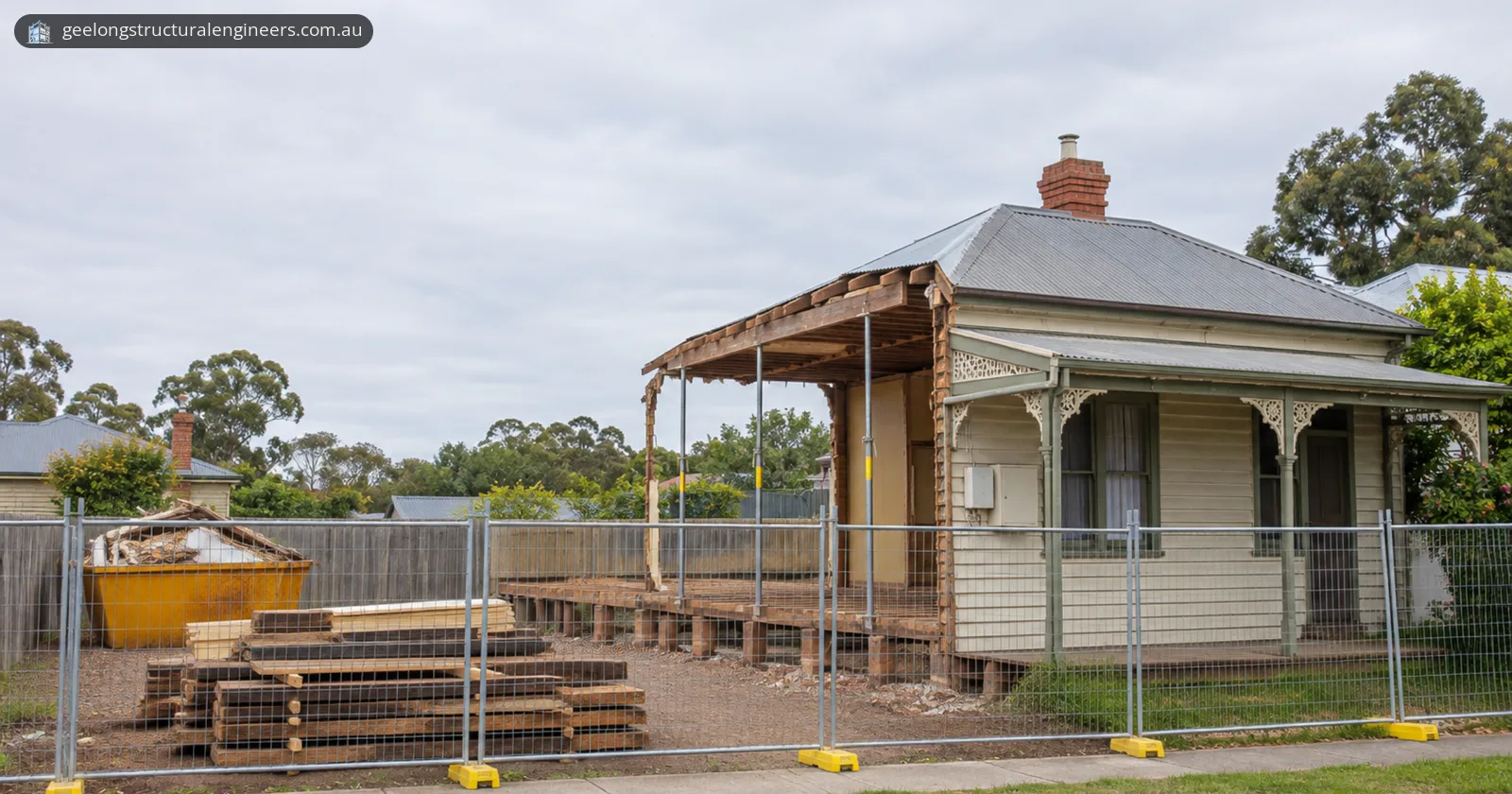
Do you need section 29A consent to demolish a building in Victoria?
Section 29A of Victoria's Building Act 1993 needs council consent for a demolition permit if over half the volume or any part of a street facade goes.
Stormwater design
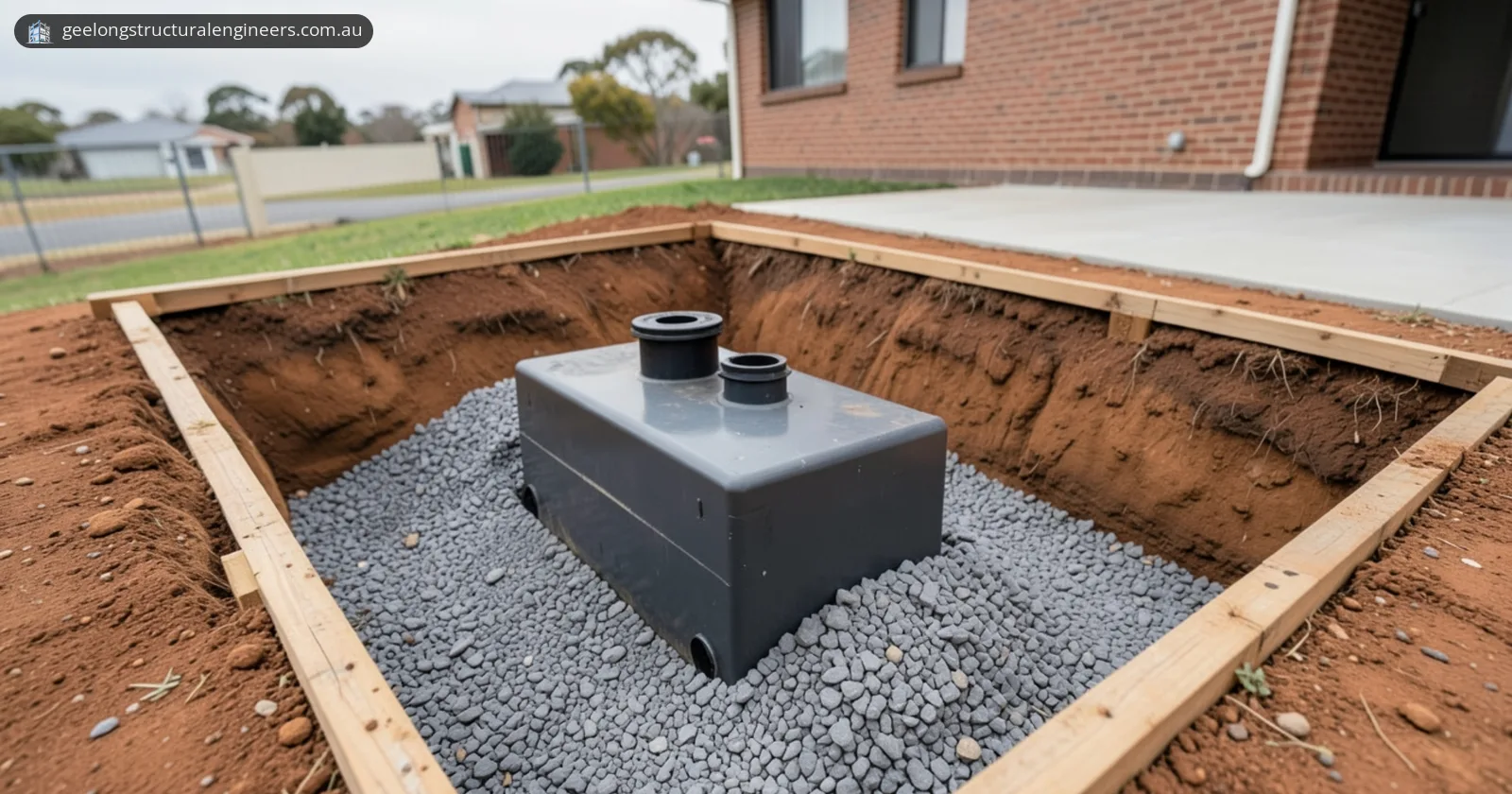
When do you need an OSD tank in Geelong?
An OSD tank holds stormwater and releases it slowly through an orifice. Geelong uses the IDM and Design Note 2; units may need one if drains lack capacity.